Apple Breeding Methods and Probability Understanding the Odds Behind Better Apples
Most people bite into an apple without a second thought about where it came from. Not the orchard — further back than that. The genetics. The decade-plus of field trials, failed crosses, and painstaking selection that preceded that first harvest. Apple breeding moves slowly by necessity, and probability is woven into every decision along the way. Just as players at oscar spin study the odds before committing to a game, apple breeders weigh inheritance likelihoods across enormous seedling populations before deciding which plants are worth keeping.
That patience isn't optional — it's the job. From the moment pollen is transferred to the time a new variety reaches commercial orchards, 10 to 20 years can pass. Programs that don't respect the math behind trait inheritance tend to waste those years chasing dead ends.
Why Probability Matters in Apple Breeding and Modern Agriculture
Here's something non-breeders rarely appreciate: growing thousands of apple seedlings isn't ambitious — it's just realistic. When you're working with polygenic traits like disease resistance, flavor, or cold tolerance, the odds of any single seedling hitting the right combination are genuinely low. Breeders aren't pessimists. They just know the numbers.
Probability models help programs estimate how large a seedling population needs to be before a desired trait pairing is likely to appear even once. If a target gene follows dominant inheritance, breeders can calculate rough expected frequencies and use those estimates to plan field space, labor, and screening schedules. Without that math, programs either under-plant and miss their window or over-plant and waste resources they don't have.
"You're not looking for one great apple — you're managing populations. The math tells you how big those populations need to be before you have a reasonable chance of finding something exceptional." — apple breeder working in a regional university program
Trait Inheritance and Statistical Prediction
Cross two apple varieties and you get a genetic shuffle. Some traits — like the presence of a specific scab-resistance gene — follow predictable Mendelian patterns and can be forecasted with reasonable confidence. Others, like the balance of acids and sugars that gives a great apple its flavor, involve dozens of interacting genes responding to soil, sunlight, and a dozen other variables. Breeders lean on data from previous crosses to build expectations for new ones. The predictions aren't perfect, but they're far better than guessing.
Risk Management in Agricultural Decision-Making
Every breeding program runs on limited land, money, and time. Probability thinking helps programs decide where those resources actually belong. Some of the real-world considerations that breeders work through each season:
- Realistic likelihood that a new cross produces anything commercially useful
- How many seedlings are needed to give rare trait combinations a fair chance of appearing
- When in the seedling's development meaningful screening can actually begin
- Probability that promising early results hold up across multiple seasons
- Exposure to weather events, pest pressure, or disease during a long trial period
- Whether the cost of advancing a seedling to field trials is justified by what the data shows
- Regulatory factors for varieties carrying novel resistance genes
Apple Selective Breeding: The Foundation of Apple Improvement
Before molecular tools existed, breeders had only observation and patience. Selective breeding — choosing plants with the traits you want and crossing them — sounds straightforward until you factor in how long apple trees take to do anything useful. A seedling might spend four to eight years growing before it produces its first fruit. That alone compresses how many selection cycles a career-length program can complete.
What makes apple selective breeding worth the wait is that it works. Honeycrisp, Fuji, Cosmic Crisp — every apple on grocery store shelves today got there because someone, decades ago, made a deliberate selection decision. Understanding that process helps growers and consumers appreciate why "new" apple varieties always seem to be just around the corner, but rarely arrive quickly.
Common Traits Targeted in Apple Selective Breeding
The following table summarizes the primary traits targeted in apple selective breeding programs, along with their complexity and typical evaluation timeline.
| Trait | Inheritance Type | Evaluation Method | Typical Timeline |
|---|---|---|---|
| Disease resistance (scab, fire blight) | Oligogenic / monogenic | Controlled inoculation trials | 3–5 years post-germination |
| Flavor and sugar content | Polygenic | Sensory panels and Brix measurements | 5–8 years post-germination |
| Fruit size and color | Polygenic | Field observation across seasons | 4–7 years post-germination |
| Shelf life and firmness | Polygenic | Post-harvest storage trials | 6–9 years post-germination |
The Role of Controlled Pollination
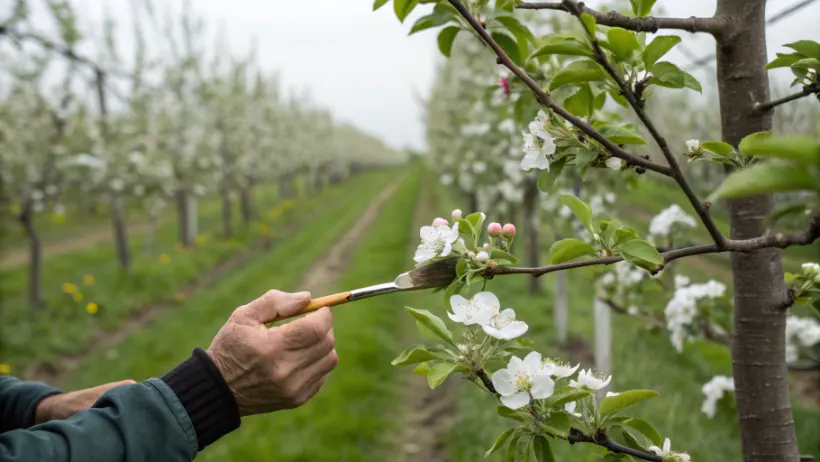
Random pollination produces random results — not useful in a breeding program with specific goals. That's why breeders hand-pollinate during a narrow spring window each year, physically transferring pollen from a chosen father tree to an emasculated mother blossom. The seeds inside the resulting fruit carry the intended genetic pairing, not whatever the wind brought in. It's meticulous, time-sensitive work, but it's what keeps the program's probability calculations grounded in reality. Without controlled pollination, the math doesn't hold.
Key Apple Breeding Methods Used in Modern Apple Breeding Programs
No single method dominates modern apple breeding. Programs blend classical hybridization with newer molecular tools depending on what they're trying to accomplish, what traits they're chasing, and what their budget allows. Some approaches shorten the waiting game. Others add precision. A well-designed apple breeding program usually uses several in combination.
"Marker-assisted selection has changed what's possible in apple breeding. We can now screen seedlings at the DNA level before they've ever set fruit — that alone can cut years off a program's timeline." — plant geneticist at a Midwest land-grant university
Comparison of Apple Breeding Methods
The table below compares several key apple breeding methods used in contemporary programs, highlighting their primary function and resource requirements.
| Breeding Method | Primary Function | Resource Intensity | Genetic Precision |
|---|---|---|---|
| Classical hybridization | Combine traits from two parent varieties | Moderate | Low to moderate |
| Marker-assisted selection (MAS) | Screen seedlings for target genes before fruiting | High (lab infrastructure) | High |
| Backcross breeding | Recover a parent's traits while adding one new trait | High (multi-generational) | Moderate to high |
| Mutation breeding (mutagenesis) | Introduce novel variation in existing varieties | Moderate | Low (random) |
Molecular Marker-Assisted Selection
Marker-assisted selection changed the math of apple improvement more than any other development in recent decades. Instead of waiting five or more years to evaluate fruit from a seedling, breeders can now extract DNA from a young plant and test directly for molecular markers linked to target genes — including known resistance loci for apple scab and fire blight. Seedlings that don't carry the markers get culled early, before they consume years of growing space. It doesn't eliminate uncertainty, but it concentrates resources on the candidates most likely to deliver, which is really what good probability management looks like in practice.
How the Midwest Apple Improvement Association Supports Apple Breeding
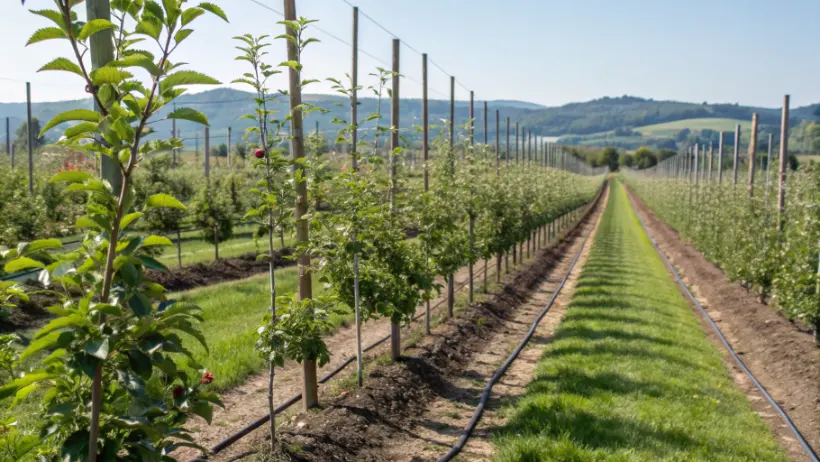
The Midwest Apple Improvement Association isn't a single research station — it's a network. University programs, private orchardists, extension services, and germplasm collections all feed into it, and the value comes from that collective reach. No individual site can replicate the range of soils, microclimates, and pest pressures found across the Midwest. MAIA's multi-site trial structure means promising new varieties get tested across all of them before anyone recommends planting.
That regional coordination matters more than it might seem. A variety that performs beautifully in southern Illinois may fail entirely in northern Michigan. MAIA's trial network surfaces those differences before growers find out the hard way, and the data it generates helps programs make smarter decisions about which seedlings deserve continued investment.
Germplasm Sharing and Collaborative Research
One of MAIA's less visible but genuinely important functions is germplasm exchange. Smaller breeding programs and university departments can access genetic material from elite breeding lines that took other institutions decades to develop — without starting from scratch themselves. For Midwestern breeders dealing with cold winters, late frosts, and persistent fire blight pressure, access to that genetic depth makes a real difference in what's possible.
Benefits for Orchardists and Regional Growers
For actual working orchardists — the people deciding what to plant next spring — the Midwest Apple Improvement Association's work translates into something practical:
- Trial performance data showing how varieties hold up specifically in Midwestern conditions
- Early access to evaluated selections before they reach general nursery availability
- Resources on folding disease-resistant varieties into existing orchard operations
- Direct connections with university researchers and extension educators
- Guidance on cultural practices suited to newer variety characteristics
- Ongoing monitoring of regional pest and disease trends
- Support for planning transitions away from older, lower-value varieties
Apple breeding asks a lot of everyone involved — time, patience, careful data collection, and a genuine comfort with uncertainty. But the discipline has a track record. Programs that take probability seriously, use the right tools, and collaborate across institutions keep producing varieties that work for real growers in real conditions. The Midwest Apple Improvement Association exists because that kind of work is harder alone. The next apple worth talking about is already in a trial row somewhere — still years from a name, but getting closer.