Best Apple Varieties for Every Taste A Selection Guide Inspired by Online Gaming Variety
Stand at a busy farm stand in September and you'll see people picking up apples, turning them over, and putting them back — searching for something they can't quite name. That search makes sense, because the gap between a watery, mealy apple and a genuinely good one is enormous. There's more variety in this fruit than most people realize, and sorting through it is half the fun. Casino and gambling platforms like ivybet work on the same principle — a wide menu of options so that everyone finds something that actually suits them. Apples are no different. The trick is knowing where to start.
This guide is for anyone who has ever wondered why one apple bakes better than another, or why the variety at the pick-your-own orchard tastes nothing like what's at the grocery store. We'll cover the basics of variety selection — flavor, color, crunch, growing conditions — without getting too deep into the botany.
How Many Apple Varieties Are There and Why Variety Matters
Over 7,500 named apple varieties exist worldwide. That number tends to surprise people, because most grocery stores carry maybe eight or ten at any given time. Commercial growing has narrowed the field dramatically — a handful of varieties that ship well and look uniform on a shelf have crowded out thousands of others that are genuinely more interesting to eat. Heritage orchards and seed banks are keeping many of those older varieties alive, and there's been real consumer interest in them over the past decade or so.
Why does variety matter so much? Because apples behave completely differently depending on what you're doing with them. Some varieties hold their shape in a hot oven; others turn to mush within minutes. A Fuji that's perfect for a kid's lunchbox would make a forgettable pie. The same goes for growing — pick the wrong tree for your climate and you'll be coaxing a reluctant, scab-prone mess for years before you give up on it.
Why the Global Apple Gene Pool Is Worth Exploring
Almost all commercial apple production traces back to a fairly narrow slice of genetics — varieties selected in the 20th century for looks, yield, and the ability to sit in cold storage for months without going soft. The wild ancestors of the modern apple came from Central Asia, and they carry a flavor range that commercial breeding has barely touched. Old varieties like Cox's Orange Pippin, Ashmead's Kernel, and Northern Spy are genuinely worth tracking down if you want to understand what apples can taste like.
Key Reasons Variety Choice Matters
- Sweetness levels vary wildly — from dessert-candy sweet to sharp and almost tannic
- Texture is not universal: some apples snap, some yield softly, and some go grainy within days of picking
- Harvest timing stretches from early July through late October — variety determines when you're eating fresh
- How long an apple keeps in cool storage ranges from three weeks to half a year, depending on what you planted
- Some varieties are magnets for scab and fire blight; others shrug off most disease pressure without any spraying
- Cold requirements differ — a Honeycrisp needs a proper winter, but some varieties were bred for mild Southern climates
- Most apple trees won't fruit well without a compatible pollinator nearby, so variety pairing matters for backyard growers
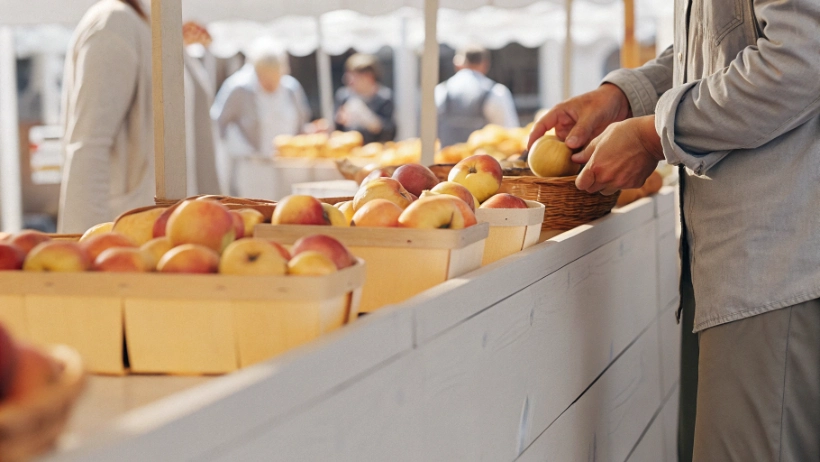
An Apple Varieties Chart: Understanding Popular Apple Varieties
The commercial apple market makes more sense when you look at the varieties that dominate it side by side. Each one ended up in grocery stores for a reason — whether that's flavor, storage life, consistent looks, or some combination of all three. The table below covers the five you'll find almost everywhere, along with what actually distinguishes them.
Popular Apple Varieties at a Glance
These aren't necessarily the best-tasting apples in existence — they're the ones that survived the commercial selection process. That's worth keeping in mind. But they're also the baseline, and understanding them makes it easier to branch out when you find something less familiar at a farm stand or specialty market.
| Variety | Flavor Profile | Best Use | Harvest Window |
|---|---|---|---|
| Honeycrisp | Sweet-tart, very crisp | Fresh eating, salads | Late August–September |
| Fuji | Very sweet, dense | Fresh eating, lunchboxes | October–November |
| Gala | Mild sweet, light crunch | Snacking, school lunches | August–September |
| Granny Smith | Sharp, tart, firm | Baking, cooking, pies | October |
| Golden Delicious | Honey-sweet, soft | Baking, applesauce | September–October |
Think of this as a starting point. Regional varieties like Cortland, McIntosh, and Braeburn each do things that these five don't. And if you ever come across Esopus Spitzenburg or Roxbury Russet at a heritage orchard, try one — they'll recalibrate your sense of what an apple can taste like. Visiting a pick-your-own farm in early October and eating your way through the rows is genuinely the fastest education.
Sweet Apple Varieties and Crisp Apple Varieties Loved by Consumers
Ask people what they want from an apple and most of them say the same two things: sweet and crunchy. That sounds simple, but there's real variation in how those qualities show up from variety to variety. Some apples are sweet in a soft, almost floral way; others hit with an immediate sugar punch and a dense bite. Getting clear on which version you actually want helps narrow things down quickly.
"Honeycrisp changed what consumers expect from an apple. Before it, people accepted mealy texture as a trade-off. Now, crunch has become a baseline expectation across the premium market." — Midwest apple grower and orchard educator
Top Sweet Apple Varieties
Fuji apples are about as sweet as a commercially available apple gets. They were developed in Japan in the 1930s, crossing Red Delicious with Ralls Janet, and the result is a dense, juicy apple with noticeably high sugar content. They also hold up well in the refrigerator — you can keep a Fuji for months without much flavor loss, which is part of why they sell so well. Gala is a step lighter: a bit less sweet, more aromatic, thinner-skinned. A lot of people prefer it precisely because it doesn't feel heavy.
Crisp Apple Varieties Worth Seeking Out
- Honeycrisp — the one that set the new standard, with a cellular structure that actually shatters when you bite
- SweeTango — a Honeycrisp cross that's even snappier, with a spicier edge to the flavor
- Cosmic Crisp — a newer Washington State release that pairs Honeycrisp crunch with serious storage life
- Rave (First Kiss) — worth knowing if you want good crunch earlier in the season, before most varieties are ready
- EverCrisp — holds its texture in cold storage better than either of its parents, Fuji and Honeycrisp
- Jonagold — a bit old-fashioned, but the sweet-tart balance and solid snap still hold up well
Crunch comes down to cell structure and moisture. Honeycrisp was specifically bred with unusually large cells — when you bite through them, they break cleanly rather than bending. That's what creates the snap. It's also why crunch fades faster than sweetness once an apple is off the tree. A Honeycrisp bought in January is a different experience from one picked in September, which is something worth keeping in mind at the grocery store.
Red, Green, and Yellow Apple Varieties Explained
Color is an imperfect shortcut, but it's not a useless one. As a rough guide: red apples lean sweet, green ones lean tart and firm, yellow ones tend toward mellow and honey-like. There are plenty of exceptions — some red apples are quite tart, and not every green apple is going to pucker your mouth. But if you're standing at a market without much information, color is a reasonable place to start.
Apple Color and Flavor by Variety
| Color Category | Variety | Flavor Notes | Common Use |
|---|---|---|---|
| Red | Honeycrisp | Sweet-tart, crisp, juicy | Fresh eating |
| Red | Fuji | Very sweet, dense flesh | Snacking, desserts |
| Green | Granny Smith | Tart, firm, acidic | Baking, cider |
| Yellow | Golden Delicious | Honey-sweet, tender | Applesauce, baking |
| Yellow | Mutsu (Crispin) | Mildly sweet, aromatic | Fresh eating, cooking |
Red Apple Varieties
Red Delicious used to be everywhere, and then it wasn't — consumers eventually pushed back on the mealy texture and bland sweetness, and sales dropped. That created space for better red varieties to take over. Honeycrisp, Fuji, and Gala now lead the category, and they're genuinely more interesting apples in almost every way. Pink Lady — technically called Cripps Pink — has also built a loyal following with its sweet-tart flavor and distinctive blush-rose skin. It's one of the better mainstream options for people who find straight-sweet apples a bit flat.
Green and Yellow Apple Varieties
Granny Smith's tartness is what makes it the baker's default choice. The firm flesh doesn't collapse under heat, and the acidity keeps a pie from tasting one-dimensionally sweet. But green apple varieties go beyond Granny Smith — Pippin, Newtown, and Shamrock are worth trying if you want something less puckering with more complexity. Golden Delicious shares a name with Red Delicious but shares almost nothing else — it's softer, sweeter, and much more fragrant. Thin-skinned and quick to bruise, it's not a great shipping apple, which is probably why it gets less attention than it deserves. For applesauce or a cooked topping, it's hard to beat.
"Color is a starting point, not a verdict. Some of the most interesting apples — Russets, Bramleys, Calville Blanc — don't fit neatly into red, green, or yellow, and they're worth every bit of effort to find." — Heritage orchard specialist
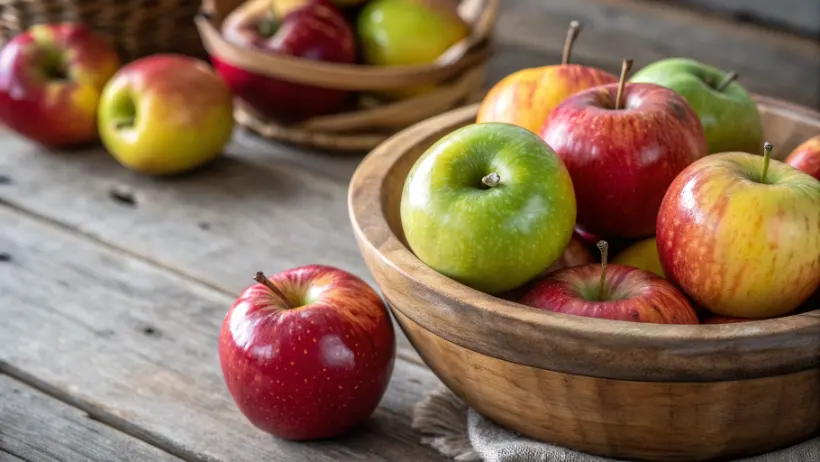
Choosing the Right Apple Tree Varieties for Different Growing Conditions
An apple tree planted this year might still be producing fruit when your kids are grown. That's not an exaggeration — a well-chosen tree on good rootstock, in the right climate, can be productive for forty or fifty years. Which means the variety decision deserves real thought. A tree poorly matched to your winters, your soil, or your disease pressure will make itself known pretty quickly, and changing course means starting over.
Climate Considerations for Apple Tree Varieties
Most apple varieties need what growers call chilling hours — time spent below 45°F that triggers the tree to break dormancy and flower correctly in spring. Honeycrisp and Fuji both need somewhere around 800 to 1,000 of these hours, which works fine in the Midwest and Northeast but not in Georgia or Southern California. Growers in warmer regions should look specifically for low-chill varieties. Anna, Dorsett Golden, and TropicSweet were developed for exactly those conditions — they need far fewer cold hours and still produce well.
Disease Resistance and Maintenance Requirements
Nobody wants to run a spray schedule every two weeks just to keep their backyard tree healthy. Disease-resistant varieties make that a lot more manageable. Liberty, Pristine, and Enterprise were all bred with resistance to apple scab, cedar-apple rust, and fire blight — which covers most of what causes trouble in eastern North American orchards. They're not completely immune to everything, but they don't need constant intervention either. For a home grower, that's a real quality-of-life difference.
Dwarf and Semi-Dwarf Rootstocks
The variety you plant is only part of the story — the rootstock it's grafted onto determines the size of the tree and how soon it starts fruiting. Dwarf rootstocks like M.9 produce compact trees, usually 8 to 10 feet tall, that start bearing in two or three years and are easy to maintain. Semi-dwarf options like M.7 or MM.111 give you a bigger tree that's more vigorous and handles drought better, which matters if your soil is sandy or water access is limited. Most nurseries will tell you what rootstock a tree is on — it's worth asking.
Conclusion
There's a lot of ground between the apple you grab without thinking at the grocery store and the one you deliberately choose because you know what it does. Whether you're after the right variety for a weekend pie, a crunch-forward snack, or a tree that won't need constant babying, the options are genuinely there. Getting to know a few key varieties — their flavors, their quirks, their best uses — makes every apple encounter more interesting.