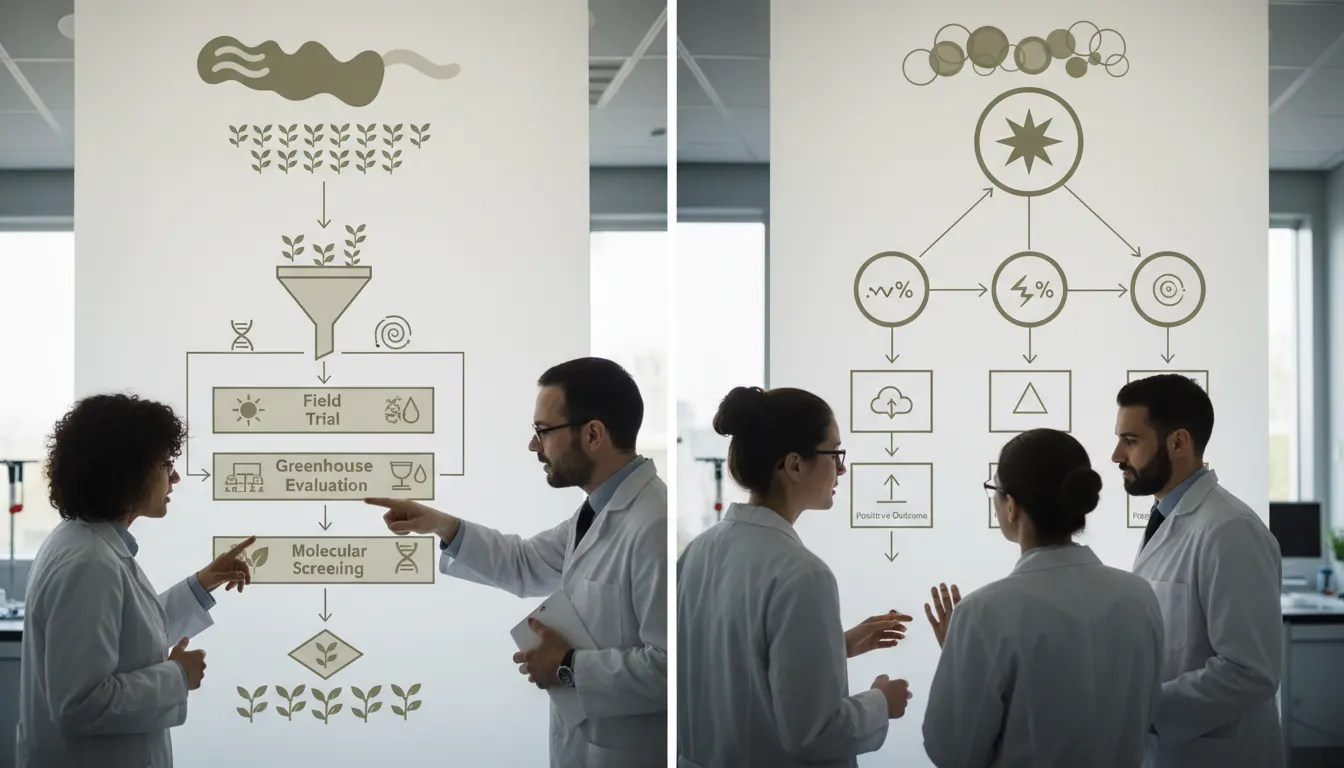
Probability and Selection Lessons from Apple Breeding and Casino Games
At first glance, apple breeding and casino games appear completely unrelated—one rooted in agricultural science, the other in entertainment. Yet both fields share fundamental principles of probability management, strategic selection, and long-term thinking that prioritize calculated outcomes over short-term results. Examining these parallels reveals insights about decision-making under uncertainty, resource allocation, and the mathematics underlying successful strategies in seemingly disparate contexts.
Probability Management in Both Fields
Both apple breeders and casino operators work with probability distributions rather than certainties. A breeder crossing two parent varieties can't predict exactly which seedling will combine the best traits, just as a casino can't predict which individual spin will win. However, both understand the underlying probabilities well enough to make informed strategic decisions.
- Apple breeders calculate the probability of desired trait combinations appearing in offspring populations
- Casino games operate on precisely calculated house edges that ensure profitability over many iterations
- Both fields use large sample sizes to overcome individual outcome unpredictability
- Success requires understanding that favorable odds don't guarantee specific outcomes
- Long-term thinking overcomes short-term variance in both contexts

Selection Strategy Comparison
Strategic selection processes in breeding and gaming reveal similar principles about resource allocation and decision-making under incomplete information.
| Aspect | Apple Breeding | Casino Strategy |
|---|---|---|
| Sample size | Evaluate thousands of seedlings | Aggregate outcomes across many plays |
| Selection criteria | Progressive elimination by trait performance | Calculated odds determine favorable bets |
| Timeline | Multi-year evaluation reduces variance | Long sessions smooth outcome distribution |
| Risk management | Diversify parent combinations | Bankroll management controls exposure |
"Whether selecting apple seedlings or making calculated bets, success comes from understanding probability distributions and making decisions that favor positive expected outcomes over time."
Long-Term Decision Making
Perhaps the most important parallel involves commitment to long-term thinking despite short-term uncertainty. Apple breeding programs maintain large populations knowing most seedlings will be eliminated, just as successful gaming strategies accept individual losses while focusing on aggregate outcomes. Both contexts reward patience, disciplined adherence to proven principles, and resistance to decisions based on insufficient sample sizes. Organizations like MAIA exemplify this approach, investing years in variety evaluation to ensure releases meet rigorous performance standards.